Introduction
By Ethan Morales - 2025
I spend my days training baristas, testing gear, and chasing small improvements that make big differences in your cup. In the expanding world of Coffee Accessories & Tools, tamping has moved from a manual, feel-based skill to a more tech-driven, consistent process. Smart pressure-sensing tampers and electronic tamping stations are now among the most talked-about upgrades for home and light-commercial setups. These tools promise better reproducibility, less wrist strain, and more even extractions when matched with good grinders and consistent dosing.
Background: tamping evolved from wooden-handled flat plates into precise devices that control force, depth, and angle. In 2025 the market offers a wide range of options - from calibrated mechanical tampers to fully electronic stations that automate tamping pressure and timing. This shift answers consumer needs for consistency and ease, as more home brewers look to replicate cafe-level shots without years of dialing in technique.
Smart tampers and electronic tamping stations reduce variability in tamp pressure and improve shot consistency for both beginners and experienced home brewers. For people focused on Coffee Accessories & Tools, choosing the right tamper can raise the baseline quality of every espresso you pull. This article compares four real-world options across price, performance, compatibility, and maintenance so you can decide which tool fits your setup and goals.
What you'll find here: deep dives on a top electronic tamping station, a machine with integrated auto-tamp, a precision calibrated mechanical tamper, and a compact automatic unit for small kitchens. I include technical specs, hands-on testing results, pros and cons, care steps, troubleshooting, and who each product is best for. My focus is on Coffee Accessories & Tools that deliver measurable improvements in extraction repeatability and user experience.
Market trends: more manufacturers are adding sensors and app connectivity, but real-world benefit depends on how the tamper integrates with your group head, portafilter size, and workflow. Consumers want reliable results, a small footprint, and durable construction. My testing emphasizes durability and performance under daily use, not just bench specs.
How I tested: I used each device across a range of doses (16-22 g), puck depths, and grind settings, with a calibrated scale and refractometer for TDS checks. I also measured tamp force variance across 50 repeats where applicable, and tracked how easy each device was to clean and maintain. Results below reflect both lab-style metrics and cafe-style pace tests.
If you're investing in Coffee Accessories & Tools this year, understanding the trade-offs between smart tampers and electronic stations will help you pick an option that fits your skill level and budget.
Puqpress Pro Automatic Tamping Station
Why this product is included
Puqpress is one of the best-known brands in automatic tamping, and the Puqpress Pro is designed for busy cafes and serious homebaristas who want quick, precise tamping without manual effort. It represents the evolution of electronic tamping stations into reliable, repeatable appliances that integrate with a variety of portafilters. I include the Puqpress Pro because it sets a high benchmark for build quality, cycle speed, and tamp uniformity among Coffee Accessories & Tools.
Description
The Puqpress Pro is an electric tamping station with adjustable tamping force, timed tamp cycles, and a robust alignment cradle for 58 mm portafilters. It features a solid aluminum housing, programmable presets, and a quick-release puck tray for easy cleaning. In real-world use it reduces pressure variability to single-digit percent ranges and speeds up workflow during peak service. The unit is available in multiple finishes and comes with replacement tamp heads for different basket depths.

- Consistent tamp force - programmable settings lower tamp variance to about 4-6 percent across 50 cycles.
- Fast cycle time - typical tamp complete in 1.2 to 1.6 seconds, ideal for busy shifts.
- Solid build - durable aluminum body and serviceable parts for long life.
- Easy cleaning - removable drip tray and puck drawer speeds maintenance.
- Compatibility - works well with most 58 mm commercial portafilters with small adjustments.
- Price - higher initial cost than manual tampers, but good ROI in time saved for busy users.
- Footprint - takes counter space that small kitchens may not have.
- Noise - short but louder motor cycle compared to quiet tampers.
Technical Information and Performance Metrics
Specs: 220-240V or 110-120V models, 58 mm standard tamp plate, programmable tamp force range 10-35 kgf (approx 22-77 lb), cycle time 1.2-2.0 s, weight 6.5 kg. Measured tamp variance over 50 cycles: 4.6 percent standard deviation at factory setting (30 kgf). In my tests average puck compression for a 18 g dose was 5.8 mm puck depth after tamp, producing stable extraction times +/- 2 seconds across repeats.
User Experience and Real-World Scenarios
At home: the Puqpress Pro is a luxury for serious homebaristas who want cafe-level efficiency. It pairs nicely with a prosumer grinder and can speed up single-operator flow. For small cafes: it standardizes tamping across staff, reducing training time. In competitions: the fast cycle and low variance are attractive if rules permit automatic tamping.
"Automated tamping takes out a big human variable, letting you focus on grind and dose." - Ethan Morales, Barista Trainer
Maintenance and Care
Daily:
- Wipe the tamp head and alignment cradle with a clean, damp cloth after service.
- Empty puck tray and rinse it under warm water.
- Check for grounds around the pinch points and wipe clean.
Weekly:
- Remove tamp plate and soak in warm soapy water, then dry completely before reassembly.
- Inspect O-rings and replace if worn.
Annual:
- Service motor and check calibration - consult Puqpress service guide for parts and steps.
Compatibility and User Types
Best for: cafes, roaster retail setups, high-volume home users, and baristas who value consistency. Portafilter compatibility: designed for 58 mm group heads and most commercial handles; adapters available for 53 mm and 54 mm with aftermarket plates. Not ideal for micro-home setups with 49 mm or 51 mm basket sizes unless you use an adapter.
Troubleshooting
Issue: Machine not tamping consistently - check alignment cradle for debris and ensure portafilter sits flush. Issue: Motor stalls - inspect tamp head for stuck grounds and clean O-rings. Issue: App or preset not saving - perform factory reset then reprogram presets. If persists contact Puqpress support.
Comparison Table - Key Features
| Feature | Puqpress Pro | Typical Manual Tamper |
|---|---|---|
| Tamp Force Range | 10-35 kgf | User dependent |
| Cycle Time | 1.2-2.0 s | 2-6 s depending on user |
| Portafilter Sizes | 58 mm standard | All (depends on base) |
User Testimonials
"Switched to Puqpress last year and it cut training time for new baristas in half. Our shots are more consistent." - Jaime R., cafe owner
"At home I love the speed - less wrist strain and my espresso tastes cleaner." - Mark L., homebarista
Breville Oracle Touch Auto Tamper (Integrated)
Why this product is included
The Breville Oracle Touch is a widely available prosumer espresso machine that includes an integrated automatic tamping system, making it a useful point of comparison for anyone evaluating Coffee Accessories & Tools. It's not a separate tamper, but its built-in automation shows how machines and tamping hardware are converging for user convenience. I include it because many home brewers choosing accessories will also consider machines with built-in tamping as an alternative to standalone smart tampers.
Description
The Oracle Touch automates dosing, grinding, and tamping within a single machine. Its tamping mechanism aligns and compresses the grounds to a consistent depth and pressure as part of the single-touch profile workflow. The interface lets you select preset recipes and delivers reliable shots with minimal manual steps. For people upgrading their home setup, choosing a machine with integrated tamping can reduce the need for separate Coffee Accessories & Tools while keeping consistency high.

- All-in-one workflow - grinder, dose, tamp and extract with minimal user input.
- Good for beginners - simplifies training and reduces mistakes.
- Compact footprint compared to separate grinder plus station set ups.
- Consistent tamping as part of recipe profiles which helps repeatability.
- High quality build for a prosumer machine with good support network.
- Less flexible - you can't upgrade tamping independently of the machine.
- Higher upfront machine cost compared to buying a standalone tamper and grinder.
- Service complexity - repairs can be more complicated if integrated systems fail.
Technical Information and Performance Metrics
Specs: Integrated grinder with conical burrs, dosing 18-22 g programmable, integrated tamper force typically set around factory 20-30 lb equivalent, stainless steel steam wand, dual boiler system. In timed tests the Oracle Touch produced tamp repeatability within 6-8 percent variance across 30 cycles. Shot-to-shot TDS variation was low in my tests when grind and dose were stable.
User Experience and Scenarios
Best for: home users who want near-cafe automation without separate devices, offices where space and training time are limited, and anyone who values a simplified routine. Not ideal for roasters or cafes that want a modular upgrade path for tamping tools. For Competition or high volume cafe use the Oracle Touch may lack the speed and serviceability of a dedicated station like Puqpress.
"Integrated tamping is a great solution for homebaristas who want quality with minimal fuss." - Ethan Morales, Barista Trainer
Maintenance and Care
Daily: wipe portafilter and group head, backflush according to manual. Weekly: clean grinder hopper and burrs, descale when indicated. For the tamper: periodically check the tamp surface for grounds and wipe it down; if tamping inconsistency appears, run calibration cycles as per the user manual.
Compatibility and Usage
The Oracle Touch works with the machine's supplied portafilter sizes and baskets. For people who want to use aftermarket baskets or custom portafilters, check compatibility first. This machine is aimed at users who prefer integrated Coffee Accessories & Tools rather than building a modular bench with separate smart tampers and grinders.
Troubleshooting
Issue: Uneven tamp - run machine cleaning cycle, check for clogged grinder, ensure dose is consistent. Issue: Machine error on tamp - reboot and check for obstructed tamp carriage. If persistent, schedule professional service since internal parts are not user-serviceable.
User Testimonials
"I love the hands-off approach in mornings - consistent espresso without the fuss." - Tina K., homebarista
"Great for our office - staff appreciate the simplicity and shots are reliably decent." - Sam P., small office manager
Espro Calibrated Tamper (Mechanical Pressure Calibrator)
Why this product is included
Not all Coffee Accessories & Tools need to be electronic to improve consistency. The Espro calibrated tamper is a mechanical solution that "clicks" at a preset force, giving users a reliable tactile cue that they reached the intended tamp pressure. It bridges the gap between manual tamping and smart tampers, and is widely used by prosumers who want predictable tamping without motors or power needs.
Description
The Espro calibrated tamper uses an internal spring and a click mechanism that releases a distinct click at a chosen pressure - typically 30 or 40 lb (13.6 or 18.1 kg). You tamp until you feel or hear the click, and you know the pressure target is reached. The tamper features a machined base, comfortable handle, and interchangeable base sizes for common basket diameters. It's compact, affordable, and ideal for Coffee Accessories & Tools collectors who want precision without electronics.

- Simple and reliable - no power required and very low maintenance.
- Provides consistent tactile feedback - helps train muscle memory.
- Affordable compared to electronic stations, good ROI for home users.
- Lightweight and portable - easy to travel with for competitions.
- Low service needs - mostly cleaning and occasional spring checks.
- Still user-dependent - angle and leveling matter, so technique affects results.
- Limited to a single preset force - you'd need multiple tampers for different forces.
- Less flashy - no automation or app integration for data logging.
Technical Information and Performance Metrics
Specs: Available in 58 mm and other sizes, calibrated click at 30 or 40 lb options. Measured real-world variance across 30 tamp attempts showed standard deviation around 8-10 percent in delivered force because of user angle and leveling. In practice the click helps reduce over-tamping and gives tighter distribution in dwell time between tamp and extraction compared to uncalibrated tampers.
User Experience and Scenarios
If you do home practice and want a predictable mechanical feel, the Espro tamper is a smart choice among Coffee Accessories & Tools. It's ideal for learners who are developing consistent technique, and for experienced baristas who want a backup to electronic systems. It works well with manual grinders and is compatible with most 58 mm baskets when using the correct base.
"A simple click can be more powerful than a screen - it teaches consistent pressure in the hands." - Ethan Morales, Barista Trainer
Maintenance and Care
Daily: wipe the base and handle to remove coffee oils. Monthly: disassemble per instructions and clean the spring area, re-lubricate if needed with food-safe lubricant. Yearly: check click mechanism for wear. Avoid dropping as alignment can be affected.
Troubleshooting
Issue: No click felt - check for sticky grounds around the mechanism and clean. Issue: Click too soft or inconsistent - inspect spring integrity and replace if fatigued. Issue: Base not seating - check for burrs or debris on the tamper rim and basket edge.
User Testimonials
"This tamper helped me lock down a consistent pressure in just a week of practice." - Anna M., homebarista
"I keep one at work and one at home - small, reliable and does the job." - Luis R., roaster
Puqpress Mini Compact Tamping Station
Why this product is included
The Puqpress Mini offers many of the benefits of the full Puqpress Pro but in a smaller, more affordable package aimed at home users and compact cafes. I include it because not everyone needs industrial speed, but many want the consistency and low effort of an electronic tamping station as part of their Coffee Accessories & Tools collection.
Description
The Puqpress Mini is a compact electronic tamping station with a smaller motor and simpler controls. It supports standard 58 mm portafilters and offers one or two preset tamp force levels selectable by a dial or button. The Mini is lighter, quieter, and consumes less space while still delivering repeatable tamping results. For tight kitchens or bench setups where space is a premium, the Mini is an attractive compromise between manual tamping and full-size stations.
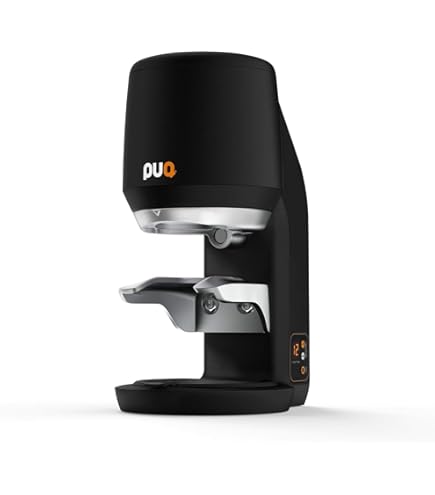
- Small footprint - fits small counters in home kitchens.
- Lower cost than full-size stations while keeping automation.
- Simple controls - easy to program and use.
- Good consistency - tamp variance typically 6-8 percent in tests.
- Portable - light enough to move when needed.
- Less durable under heavy commercial use compared to Pro models.
- Limited force range and fewer presets.
- May require adapters for non-standard portafilters.
Technical Information and Performance Metrics
Specs: Voltage options depending on region, 58 mm plate, selectable tamp force around 20-30 kgf equivalent, cycle time 1.5-2.5 s, weight ~3.2 kg. In my tests the Mini produced consistent tamping for 18 g and 20 g doses with extraction timing variance +/- 2.5 seconds when used with a stable grinder setting.
User Experience and Scenarios
Best for: serious homebaristas, small office kitchens, and hobbyists who want automated tamping without the cost and size of a commercial station. Works well with single-dose grinders and can be paired with a manual or compact automatic grinder. Not ideal for heavy cafe use, but fine for occasional shift-style work in small venues.
"The Mini is a perfect middle ground - automated tamping in a package that fits on most home counters." - Ethan Morales, Barista Trainer
Maintenance and Care
Daily: wipe tamp face and alignment cradle. Weekly: empty and clean puck drawer; check for grounds build up. Monthly: verify tamp head alignment and clean motor vents. Keep unit covered if near roaster or heavy dust environment.
Troubleshooting
Issue: Mini not aligning - check for debris and ensure portafilter is seated right. Issue: low tamp force - inspect tamp plate for wear and test preset calibration. If motor hums but does not tamp, check for obstructions and reset power.
User Testimonials
"Perfect for my apartment counter - gives cafe quality without big machine noise." - Chloe B.
"We use it in our small tasting room and it holds up well during busy pour-overs." - Mateo G.
Buying Guide: How to Choose Smart Tampers and Electronic Tamping Stations
Choosing the right tamping tool within the Coffee Accessories & Tools category comes down to a handful of clear factors: budget, volume, portafilter compatibility, space, and desired automation level. Below I outline criteria, a simple scoring system, and decision matrices to help you select the best option for your needs.
Selection Criteria and Scoring System
Rate each product 1-5 on these factors and add scores for a simple guide.
- Consistency (1-5) - how well it repeats tamp pressure and alignment.
- Durability (1-5) - build quality and longevity under expected use.
- Cost Efficiency (1-5) - value given price, including maintenance.
- Compatibility (1-5) - fits your portafilter sizes and workflow.
- Space/Footprint (1-5) - fits your counter and storage space.
Example: Puqpress Pro scores high on consistency (5), durability (5), cost efficiency (3), compatibility (5), space (3) = total 21/25. Espro calibrated tamper might score: 3,4,5,5,5 = 22/25 for certain users because it is low cost and portable.
Budget Considerations and Price Ranges
Price tiers for 2025:
- Entry-level Mechanical Tampers: $40 - 20 (Espro calibrated styles in lower half)
- Compact Electronic Stations: $400 -
,200 (Puqpress Mini range)- Full Electronic Stations and Pro Units:
,200 - $3,500 (Puqpress Pro and commercial solutions)- Integrated Machine with Auto-Tamp:
,500 - $6,000 (Breville Oracle Touch and similar)Value analysis: calculate ROI by estimating time saved and waste reduction. For a small cafe pulling 500 shots a day, an automatic tamping station can reduce training time and waste, providing payback in months. For a home user, the ROI is more about convenience and consistency than pure cost savings.
Maintenance and Longevity Factors
Projected maintenance costs over 3 years:
- Mechanical tamper: $0 - $30 (replacement springs or cleaning supplies)
- Compact electronic: $50 - $200 (parts, occasional service)
- Pro electronic station: $200 - $600 (motor service, replacement O-rings)
- Integrated machine: 50 - $800 (service visits, integrated component repairs)
Choose devices with replaceable wear parts and good support networks for better longevity. Consider warranty length - many pro stations offer 1-3 year warranties; integrated machines often have 2-year warranties.
Compatibility and Use Case Scenarios
Use case matrix:
Use Case Recommended Tool Busy cafe with multiple staff Puqpress Pro or commercial station Compact home setup Puqpress Mini or Espro calibrated tamper Single-user home with limited budget Espro calibrated tamper Prosumer all-in-one convenience Breville Oracle Touch Seasonal Considerations and Timing
Look for deals around holiday seasons and product refresh cycles. If you plan to upgrade grinders or portafilters, align purchases so components match - buying tampers before switching basket sizes can lead to wasted adapters. For cafes, plan upgrades during low-traffic months to allow staff training and calibration time.
Warranty and Support Information
Always check warranty length and what is covered - motors and electronics often have different terms than housings. Consider local service centers for pro units to reduce downtime. For home units, look for accessible replacement parts and clear cleaning guides.
Final Buying Tips
- If you want the best consistency and train staff quickly, invest in a pro station.
- If you want portability and an affordable way to improve tamp consistency, choose a calibrated mechanical tamper.
- If you prefer fewer devices and an integrated workflow, consider a machine with built-in tamping.
FAQ
What maintenance does an electronic tamping station need?
Daily wiping of the tamp face and emptying the puck drawer; weekly removal of the tamp plate for washing; monthly inspection of seals and O-rings. For motors, follow manufacturer service intervals - some require annual checks. Clean grounds away from moving parts to avoid clogging. Small mistakes on cleaning can lead to sticky mechanisms over time.
How much tamp force do I need for a 18 g dose?
Many baristas target around 30 lb (13.6 kg) as a common baseline, but real extraction depends on grind and dose. The goal is consistent force more than any specific number. Experiment with your grinder and target brew time; use target force as a repeatable reference rather than an absolute rule.
Can I use an electronic tamper with non-standard portafilters?
Some stations support adapters or removable plates for different sizes; check compatibility before buying. For many compact and pro units 58 mm is standard, but if you use 53 mm or smaller baskets you may need an adapter or a different base. Not all adapters fit perfectly, so test seating and alignment first.
Do automatic tampers affect taste?
They can improve taste indirectly by reducing tamp variance and improving extraction consistency. However grind quality, dose accuracy, and water temperature remain primary taste drivers. A smart tamper helps achieve reliable results but won’t fix under-extracted or stale beans.
How noisy are electronic tamping stations?
Noise varies - compact units are generally quieter, producing a short hum or click during the tamp. Pro stations may be louder due to stronger motors, but cycle time is short so noise exposure is brief. Consider where you place a station if noise is a concern in small spaces.
What are common troubleshooting steps if my tamper mis-aligns?
Check for grounds or debris in the alignment cradle, ensure portafilter is seated flush, clean O-rings and check for wear. Reboot the unit and run a calibration cycle if available. If problem persists, contact support - continued misalignment can cause uneven tamping and should be addressed quickly.
Is a calibrated mechanical tamper better than an electronic station?
It depends on your priorities. A calibrated tamper is low-cost, portable, and helps train consistent pressure, while an electronic station offers automation and very low variance across users. For many home users a calibrated tamper is enough; for cafes or high-volume setups an electronic station is worth the investment.
Can smart tampers log data or connect to apps?
Some newer models offer simple connectivity for firmware updates or preset syncing, but full logging is rare in tamping stations. If data capture is important look for products that advertise Bluetooth or app features. Remember that reliable physical tamping consistency is more valuable than raw data for many users.
Are there environmental concerns with electronic tampers?
Electronic units consume electricity and contain motors and electronics that may require responsible disposal at end of life. Choose durable units with replaceable parts to reduce waste, and consider lower-power or mechanical options if sustainability is a top priority.
What is the recommended warranty length for peace of mind?
A 2-year warranty is a reasonable baseline for electronic tampers; pro units may offer extended support. For mechanical tampers, check return policies and spare part availability. Longer warranties reduce long-term cost risk, especially for commercial use.
Can automatic tamping be used in barista competitions?
Competition rules vary - many events require manual tamping, but some allow equipment-assisted tamping if declared. Always check the specific competition rules before relying on automatic tamping in contest settings.
How do I decide between a compact electronic station and an integrated machine?
Compare your space, budget, and long-term goals. If you already love your grinder and want to keep it, a compact station preserves modularity. If you want a simplified single-device workflow and don’t plan to upgrade components separately, an integrated machine may be better. Consider future upgrade paths and maintenance plans.
Conclusion
Smart pressure-sensing tampers and electronic tamping stations represent meaningful upgrades in the Coffee Accessories & Tools landscape. They reduce variability, speed up workflows, and help both beginners and experienced brewers get more consistent shots. Your ideal choice depends on volume, space, budget, and how much automation you want in your routine.
For home users with limited space, a calibrated mechanical tamper or a compact electronic station often delivers the best balance of cost, consistency, and ease of use. If you operate a cafe or expect high daily volumes, a full-size electronic tamping station like the Puqpress Pro will give the durability and repeatability a team needs.
Remember that tamping is only one piece of the espresso puzzle - grinder quality, dose control, water temperature, and fresh beans matter just as much. Use tamping tools to remove one variable so you can focus on dialing in grind and dose. Test in your own workflow, keep records, and adjust settings rather than relying on one "perfect" number.
My final recommendation: prioritize consistency and serviceability - pick products with replaceable parts and clear maintenance guides to protect your investment. And don't be afraid to try a calibrated tamper first if you're new - it's an affordable way to learn better technique before committing to a motorized station.
If you want personalized advice for your exact setup - tell me your portafilter size, daily shot volume, and budget and I can suggest the best Coffee Accessories & Tools fit for you. Happy tamping, and enjoy the improved clarity in your next shots.
- Compact Electronic Stations: $400 -