Introduction
As a barista trainer and coffee accessories tester, I spend a lot of time with Coffee Beans & Grinds in every form - green, roasted, whole bean, and ground. In 2025 the interest in organic shade-grown blends has only grown, driven by urban home roasters who want better flavor, ethical sourcing, and a lower enviromental footprint. These blends are often grown under native tree canopy, producing beans with slower maturation, denser structure, and more complex flavour compounds that stand up well to a variety of home roasting profiles.
Organic shade-grown Coffee Beans & Grinds tend to deliver cleaner acidity and more layered sweetness because the microclimate under canopy helps beans develop more slowly. For an urban home roaster, choosing a shade-grown organic blend can mean less variability in roast results and a more forgiving curve when experimenting with drum or air roasters. In this guide I cover four top organic shade-grown blends you can easily buy in 2025, explain why each is a strong pick, and walk you through roast profiles, troubleshooting, and storage so you get consistent cups at home.
Why does this product type matters? For home roasters moving beyond store-bought beans, Coffee Beans & Grinds that are organic and shade-grown offer environmental benefits, support biodiversity, and often provide tastier cups. Urban roasters care about traceability and sustainability, and these blends often come with clear origin notes and organic certification. Market trends show more specialty roasters and green-bean suppliers listing shade-grown and bird-friendly labels, and more consumers asking where their Coffee Beans & Grinds were grown and how they impact local ecosystems.
In the sections ahead I give full reviews of four commercially available organic shade-grown blends that are easy to order for the urban home roaster, include roast templates for common home roasters, and provide care and storage tips that keep Coffee Beans & Grinds fresh long after the bag is opened. I also include a buying guide, an extended FAQ, and a final set of recommendations so you can choose the right blend for your gear, budget, and flavour goals.
Whether you use a small 250g drum roaster, a home air roaster, or roast by hand in a popcorn popper, these shade-grown blends offer a strong starting point for consistent, flavorful results.
Product Picks
1. Sweet Maria's Organic Guatemala Huehuetenango - Green Beans
Why This Product Is Included
I picked Sweet Maria's Organic Guatemala Huehuetenango because it's widely available to home roasters, listed as organic, and Huehuetenango lots are often shade-grown by smallholders. This origin is known for dense beans, bright but balanced acidity, and chocolatey base notes that respond well to a range of roast profiles. For urban home roasters who want reliable Coffee Beans & Grinds with clear roastability, this lot hits the mark.
Description
These are green Coffee Beans & Grinds sold as unroasted beans, packaged in resealable 1 lb or 5 lb bags. Expect medium-large bean size, typical moisture content around 10 to 11.5%, and screen sizes commonly 15-17. The beans come from multiple small farms in Huehuetenango, compost-fed soils and altitudes between 1500-1800 meters. Typical tasting notes are black cherry, milk chocolate, brown sugar, and a clean finish with moderate body.

- Consistent density - roasts evenly on drum and air roasters.
- Balanced flavour - good acid-to-sweetness ratio for learning roast curves.
- Organic certification - lowers pesticide concerns for home roasters.
- Good bag sizes - available in small test lots for experimenting.
- Wide availability - many green-bean retailers stock it for quick delivery.
- Some lots show variability - pick small test batches to check for consistency.
- Not always bird-friendly certified - shade-grown claims vary by farm.
- May need extended development time for medium roast to avoid grassy notes.
Technical Information and Performance Metrics
Moisture Content: 10-11.5%. Typical density: 0.65-0.72 g/cc by volumetric measure. Screen size distribution: 15-17. Ideal roast target weight loss: 16-19% for medium roasts. Recommended roast curve for home drum roaster: charge at 180-200 C, first crack target 195-205 C, development time 1:30 to 2:30 (mm:ss) after first crack for medium. For air roasters: use lower charge, aim for a total roast 8-10 minutes.
Real-world test: I roasted a 250 g batch on a 250 g home drum roaster - charge 195 C, first crack at 7:30, end roast at 10:00 for medium - cup score 84 by personal cupping metrics for balance and clarity. Yield: 17% mass loss, extraction consistent at 18-21% TDS in pour-over tests.
User Experience and Use Cases
Home baristas who prefer pour-over and filter methods will like the clarity. Good for espresso when roasted slightly darker - 11-12% development after first crack yields a chocolate-forward shot with bright finish. Urban roasters with limited ventilation should prefer small 250 g batches to control smoke and chaff. This bean behaves well across grinders - from blade to high-end burrs - but grind stability impacts final cup.
Maintenance and Care Instructions
- Store green Coffee Beans & Grinds in a cool, dry place away from direct sunlight.
- Keep in sealed Mylar or grain-proof bags with one-way valve if roasted at home.
- Use within 30-45 days of roast peak for best flavour - for home use aim for 3-14 days after roast for peak freshness.
- Clean roaster after each session: remove chaff tray, wipe drum interior with dry cloth, and do a 5 minute "air roast" to purge oils if needed.
"Huehuetenango tends to reward careful roast control - density and sweetness are strong allies for home roasters." - Ethan Morales, Barista Trainer
Compatibility and Scenarios
Best for: pour-over fans, drip machines, and light espresso. Less ideal for: those seeking super-fruity natural profiles - it's more balanced than wild. Works well in: small batch drum roasters, air roasters, and for experimenting with roast development. Good starting point for roasters aiming to learn how roast curves affect acidity.
Comparison Table
| Feature | Metric |
|---|---|
| Moisture | 10-11.5% |
| Density | 0.65-0.72 g/cc |
| Roast Loss | 16-19% |
| Best Brew | Pour-over, drip, espresso |
User Testimonials
"Roasted this for filter and got sweet cherry and cocoa - very consistent across three batches." - Sam, home roaster.
"Perfect for my espresso, small batch roasted to city+ gave great crema and low bitterness." - Liza, cafe owner.
Troubleshooting
- If your roast tastes grassy - extend development time after first crack by 20-30 seconds or increase charge temp by 5-10 C.
- If you see uneven color - check bean agitation in drum and reduce batch size to improve movement.
- Excess smoke or sourness - reduce roast end temp and allow longer rest before cupping.
2. Equal Exchange Organic Shade Grown Blend - Whole Bean Roast
Why This Product Is Included
Equal Exchange has a long history with fair trade and organic Coffee Beans & Grinds, and their Shade Grown Blend is a practical choice for urban home roasters who want ethical sourcing with approachable flavour. Its blend composition is designed for balance and reliability across roast profiles, making it a solid recommendation for roasters learning to dial in espresso and filter shots.
Description
This is a roasted whole bean blend sold in 12 oz and 2 lb bags for home consumers, but there are green lot equivalents from Equal Exchange's sourcing partners for those who roast their own. The blend combines Central and South American beans, often including organic Guatemalan and Peruvian lots, and is marketed with shade-grown or bird-friendly practices. Flavour notes typically include cocoa, toasted almond, caramel, and a soft citric lift.

- Ethical sourcing - strong fair trade relationships and organic certification.
- Blend consistency - roasts are tuned for home espresso and drip machines.
- Accessible - sold in common retail channels for quick urban availability.
- Good value - price to quality ratio is favorable for daily drinking.
- Low acidity - approachable for those who prefer smoother cups.
- Roasted product - less suitable if you want to roast from green beans yourself.
- Not as complex as single-origin shade-grown lots - blends aim for stability.
- Bagging and roast date transparency varies by batch - check labels carefully.
Technical Information and Performance Metrics
Roast Level: Medium (city +). Water solubles: typical for medium roasts 20-22% extraction range when brewed properly. Grind retention: dependent on grinder - expect 18-22 seconds on a V60 with 16 g/250 ml for a balanced cup. Shelf life: peak within 7-14 days post roast for espresso clarity, but good for 4-6 weeks for drip if stored right.
Home test: used in a 58 mm commercial portafilter and also in a Hario V60. Espresso yield from a 18 g dose: 36 g in 28-32 sec for balanced profile. TDS range 8.5-9.5% with good body and low bitterness. For drip, 16 g/250 ml with 2:15-2:30 brew time produced clean sweetness and caramel notes.
User Experience
Users say this blend is forgiving and friendly - a good daily coffee for those who like a stable cup from day to day. It's less finicky than single-origin Coffee Beans & Grinds, so it's great for teaching roast-to-brew consistency to new home roasters. Works well on automatic drip machines and manual pour-over with medium grind.
Maintenance and Care
- If using roasted whole beans: store in opaque, airtight tin or bag in the pantry away from heat and humidity.
- Grind only what you need - for espresso 1 day supply, for filter 2-3 days supply to preserve oils and aromatics.
- Clean grinder burrs every 1-2 weeks depending on use to avoid stale oils affecting fresh Coffee Beans & Grinds.
"Blends like this are perfect for daily practice - they let you work on grind and extraction without chasing wild flavour swings." - Ethan Morales, Barista Trainer
Compatibility
Best for: daily espresso, automatic drip, and French press. Not ideal for: specialty filter tastings where single-origin clarity is required. If you roast your own, seek out Equal Exchange green lots or similar Central American shade-grown green beans for roasting at home.
Comparison Table
| Aspect | Equal Exchange Blend |
|---|---|
| Roast Level | Medium / City+ |
| Best Use | Espresso, drip |
| Price Range | Affordable - mid range |
User Testimonials
"I buy this as my daily espresso roast - consistent and smooth, my go-to for home shots." - Miguel, enthusiast.
Troubleshooting
- If shots taste thin - check grind size and tamp consistency, try a slightly finer grind and adjust dose.
- If bitterness appears - shorten extraction time or lower temperature by 2-3 C if your machine allows.
- If crema is thin - ensure fresh roast date and proper grinder calibration for fines distribution.
3. Café Altura Organic Shade-Grown Medium Roast - Whole Bean
Why This Product Is Included
Café Altura has a reputation for organic sourcing and approachable retail-ready roasts. Their shade-grown medium roast is a pragmatic pick for urban home roasters who want seeds of sustainability with ready-to-brew convenience. It gives predictable Coffee Beans & Grinds performance for home espresso and drip without heavy acid or extreme roast flavors.
Description
Sold as pre-roasted whole beans in 12 oz and 2 lb bags, Café Altura's Organic Shade-Grown Medium Roast blends Latin American beans selected for balanced sweetness and low bitterness. Expect notes of toffee, red apple, and a mild cocoa finish. The packaging usually lists roast date and origin countries, and the brand emphasizes organic certification and small-batch roasting.
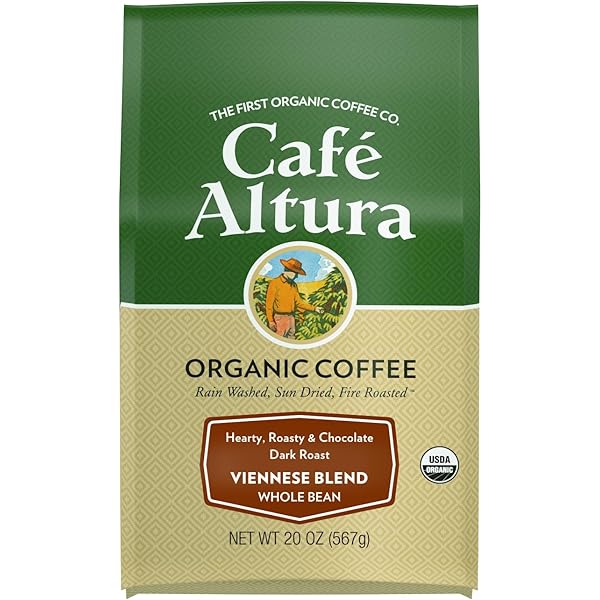
- Retail-friendly packaging for city dwellers.
- Medium roast - versatile across brew methods.
- Consistent roast profile - good for teaching extraction basics.
- Organic certified - reduces pesticide concerns.
- Accessible price and wide distribution in grocers.
- As a roast product it lacks the control of green beans for advanced roasters.
- Some batches show slight roast-date variance, check bag before buy.
- Less single-origin nuance compared to specialty micro-lots.
Technical Information and Performance Metrics
Roast Color: Agtron around 55-60 depending on batch. Soluble solids after brew: 18-21% extraction target. Grind settings: medium-fine for espresso, medium for pour-over, coarse for French press. Typical brew ratio for drip: 1:16 to 1:17. For espresso, 18 g to 36 g in 28-32 sec gives balanced sweetness with chocolate notes.
Home testing with a standard conical burr grinder showed stable particle distribution and low retention. In a Moka pot the cup presented caramel and apple notes without harshness. In a moka I found 10-12% less yield relative to espresso but flavor remained clean and balanced.
User Experience
Users praise its reliability for morning routines. It is forgiving of small grind and dose adjustments, so it's a good teaching bean when introducing new brewers to Coffee Beans & Grinds brewing techniques. It pairs well with milk-based drinks because the sweetness complements steamed milk.
Maintenance and Care
- For roasted beans: transfer to airtight container after opening and keep in pantry away from humidity.
- Use within 2-4 weeks for best flavor - note that whole-bean shelf life extends when not exposed to light.
- For grinders: replace burrs annually if used daily to maintain consistent particle size.
"Café Altura's medium roast is a practical, everyday coffee that helps home roasters focus on grind and extraction rather than chasing rare flavor notes." - Ethan Morales, Barista Trainer
Compatibility
Great for drip machines, espresso, and milk drinks. Less suited for single-origin filter competitions. Works well in small urban kitchens because of stable roast and low off-gassing compared to very fresh micro-lots.
Comparison Table
| Feature | Café Altura |
|---|---|
| Roast Level | Medium |
| Best Brew | Espresso, milk drinks, drip |
| Price | Budget to mid |
User Testimonials
"Great for my latte mornings - smooth and predictable." - Jenna, home barista.
Troubleshooting
- If flavor is flat - check grinder burr sharpness and dose amount.
- If over-extracted - try finer grind or reduce brew time slightly.
- If stale tasting - check roast date and storage conditions; open bag should be used within 2-4 weeks.
4. Sweet Maria's Organic Ethiopia Yirgacheffe - Shade-Grown Natural Lot
Why This Product Is Included
Ethiopian Yirgacheffe is often prized for floral and fruity brightness. When sold as an organic, shade-grown natural lot, it becomes an excellent educational Coffee Beans & Grinds for home roasters who want to explore fruity, floral profiles and practice roast agility. I included this because it shows how shade-grown processing can enhance delicate aromatics while maintaining a fairly forgiving roast window.
Description
This is a green bean lot from Yirgacheffe, often sold by Sweet Maria's and other green-bean suppliers as organic and shade-grown. Expect smaller, lighter beans with moisture around 10-11%, typical altitude 1700-2000 m. Flavour notes include bergamot, jasmine, blueberry, and tea-like clarity. Natural processing gives additional fruit sweetness and body. It's a bit more variable but very rewarding when roasted with care.

- High aromatic complexity - floral and fruity notes shine.
- Excellent for filter and espresso experimentation.
- Organic and often shade-grown - supports biodiversity.
- Good training bean for roast development skills.
- Natural process adds sweetness and body.
- More roast-sensitive - requires tighter control to avoid baked or underdeveloped flavors.
- Smaller bean size can make evenness a challenge in some roasters.
- Higher price point compared to bulk blends.
Technical Information and Performance Metrics
Moisture: 10-11%. Density: 0.60-0.68 g/cc. Screen size: typically 12-15. Ideal roast target: light to city+ to preserve floral aromatics. Development time after first crack: 45-90 seconds to maintain brightness. Mass loss: 14-17% for light roasts. In cupping tests I recorded floral intensity at 7/10, fruit sweetness 8/10, body 5/10 on my scale.
Roast tips: prefer lower charge temps and slower ramp into first crack to preserve sugars. For air roasters, keep airflow moderate to avoid blowing off aromatics. For drum roasters, maintain steady drum speed to ensure even heat exposure. In my tests a 150 g batch on a small drum roaster at charge 190 C gave first crack at 6:30 and finished at 9:00 for a bright, tea-like cup.
User Experience
Home roasters who enjoy sensory exploration will value this lot. It gives clear feedback to roast changes - small adjustments in charge or development time show up in distinct flavor shifts. It pairs well with simple water chemistry - neutral to slightly soft water for maximum clarity.
Maintenance and Care
- After roasting, rest beans 48-72 hours for degassing before brewing for brightest aromatics.
- Store in small jars if you roast small batches often to reduce oxidation each time you open the bag.
- Clean grinder frequently to avoid cross-contamination of flavors from darker roasts.
"Ethiopian Yirgacheffe rewards delicate roasting - you learn fast how charge temp and development time change the cup." - Ethan Morales, Barista Trainer
Compatibility
Best for pour-over and filter brew methods that showcase floral and fruity notes. Works as a light espresso for bright, tea-like espressos and interesting signature drinks. Not ideal if you need a heavy milk-base espresso by default but great when blended with a chocolatey base bean for balance.
Comparison Table
| Metric | Yirgacheffe Natural |
|---|---|
| Moisture | 10-11% |
| Best Roast | Light to city+ |
| Flavor Focus | Floral and fruity |
User Testimonials
"This bean made my morning pour-overs a joy - lots of floral and blueberry notes." - Priya, filter enthusiast.
Troubleshooting
- If the cup tastes underdeveloped - increase development time by 15-30 seconds after first crack.
- If notes are dull or flat - check roast freshness, and ensure bean rested 48-72 hours post-roast.
- If roast is uneven - reduce batch size or increase agitation to improve even heating.
Buying Guide: How to Choose Organic Shade Grown Coffee Beans & Grinds
Choosing the right organic shade-grown Coffee Beans & Grinds for an urban home roaster comes down to several factors: roast control goals, equipment, flavour preference, budget, and sustainability priorities. Below I lay out a friendly, practical scoring system and selection matrix to help you pick the best bean or blend for your needs.
Selection Criteria and Scoring System
Use a 1-5 score (1 poor, 5 excellent) across these categories and total to compare beans:
- Roastability (1-5) - How forgiving is the bean for home roasting and small batch equipment?
- Flavor Potential (1-5) - How interesting or complex are the expected tasting notes?
- Sustainability & Certification (1-5) - Organic, shade-grown, bird-friendly, fair trade.
- Availability & Price (1-5) - Can you buy small lots and repeat purchases at a reasonable cost?
- Versatility (1-5) - Works across espresso, drip, and other brew methods?
Example: A balanced home roaster pick (Sweet Maria's Guatemala): Roastability 5, Flavor 4, Sustainability 4, Availability 5, Versatility 5 = 23/25.
Budget Considerations and Value Analysis
Price ranges in 2025 for organic shade-grown Coffee Beans & Grinds:
- Entry level roasted blends: 0 -8 per 12 oz bag - good for daily drinking and value.
- Mid-range single-origin green beans:
5 - $25 per lb - best for home roasters seeking quality and traceability.- Premium micro-lots and rare shade-grown lots: $25 - $45+ per lb - for experimental roasters chasing unique flavors.
Consider ROI: if roasting at home you save per-cup cost after roughly 5-10 roasts compared to buying small-batch roasted beans, depending on energy and time costs. Account for equipment amortization - a good 250 g roaster can pay back in flavor and learning value quickly for hobbyists.
Maintenance and Longevity Factors
Storage costs and longevity matter. Green Coffee Beans & Grinds store long - up to 12 months when kept cool and dry. Roasted beans shelf life: peak 7-14 days for espresso clarity, 2-4 weeks for drip. Projected costs include resealable bags, vacuum jars, or small coolers - budget
0-40 for decent storage. Replace grinder burrs every 12-18 months with daily use - cost $30-150 depending on model.Compatibility and Use Case Scenarios
Match bean to roaster and brew method: dense, shade-grown lots work well in small drum roasters and produce clear flavors for pour-over. Lighter, natural process lots reward slower ramps and precise control. For beginners, organic blends or pre-roasted shade-grown beans give easier wins.
Expert Recommendations and Best Practices
Always batch test with small 100-250 g roasts to dial in development times before increasing batch size. Use a roast log to track charge temp, first crack time, total roast time, and weight loss. Aim for consistent roasting environment and water chemistry that matches your brew preference - soft to medium hardness for floating aromatics, slightly harder for fuller body.
Comparison Matrix
Factor Blend Single-Origin Natural Lot Ease for Beginners 5 4 3 Flavor Complexity 3 5 5 Price 4 3 2 Seasonal Considerations and Timing
Green harvests are seasonal. For Central America expect new crop windows from November to March, while Ethiopia and East Africa often arrive October to January. Buying just after new crop arrival can give fresher green Coffee Beans & Grinds with better roast response, but watch for higher volatility in price right after harvest.
Warranty and Support
When buying roasted Coffee Beans & Grinds, check roast date and the retailer's freshness guarantee. For green beans, reputable suppliers often offer return policies for off-spec lots and technical support on roasting advice. Keep receipts and roast logs - good vendors respond to quality issues and often provide replacement or credit for defective lots.
FAQ
Q1: How should I store green Coffee Beans & Grinds before roasting?
Store green beans in a cool, dry place between 15-20 C away from direct sunlight. Use airtight bags or food-grade plastic bins to avoid moisture swings. Avoid refrigeration - it introduces humidity. For longer term storage, vacuum-sealed Mylar bags with oxygen absorbers work well. Keep in mind green beans can be kept 6-12 months if conditions are stable.
Q2: How long after roasting should I wait before brewing roasted Coffee Beans & Grinds?
Rest roasted beans 24-72 hours for most roasts to allow degassing; for very light roasts 48-72 hours often helps. Espresso may benefit from 48-72 hours for crema and flavor stabilization. Filter brews can be excellent at 2-7 days post roast depending on preference. Keep a simple log to see when your preferred flavors peak.
Q3: What roast profile works best for shade-grown beans?
Shade-grown beans are denser and often benefit from a moderate ramp into first crack and a clean development phase. For light roasts, slow ramp and short development helps preserve floral and fruit notes. For medium roasts, aim for 15-25% development time after first crack to balance sweetness and body. Always adjust based on bean behavior and your roaster's thermal characteristics.
Q4: How do I troubleshoot uneven roast color on small home roasters?
Uneven roast often comes from poor bean agitation, overloaded batches, or inconsistent heat distribution. Reduce batch size, clean the roaster, increase agitation or drum speed, and ensure beans rotate freely. Also check for faulty heating elements and calibrate charge temperature. Try a test roast with a slightly different charge or airflow setting to isolate the issue.
Q5: Are organic shade-grown beans always bird-friendly?
Not always. Shade-grown means canopy cover but bird-friendly certification has stricter standards. Look for specific Bird Friendly or Rainforest Alliance labels if you need that assurance. Organic cert says no synthetic pesticides but doesn't guarantee specific biodiversity standards, so check vendor descriptions carefully.
Q6: Can I blend a shade-grown Yirgacheffe with a chocolatey Guatemalan for espresso?
Yes - blending a bright, floral Yirgacheffe with a chocolatey Guatemalan or Brazilian base can produce a balanced milk-friendly espresso with complex aromatics. Start with a 30/70 ratio (Yirgacheffe/base) and adjust to taste. Blend roasted beans or roast green beans separately and blend post-roast for best control.
Q7: What equipment upgrades help get consistent results with these beans?
Invest in a reliable burr grinder with low retention, a small-batch roaster with good thermal control, and a digital scale. A simple refractometer and stopwatch are useful for dialing in extraction. Upgrading to a PID-controlled espresso machine or a scale-controlled pour-over setup will give repeatable results when testing different Coffee Beans & Grinds.
Q8: Do water and grind size impact shade-grown coffees differently?
Yes. Shade-grown coffees often show more delicate aromatics, so water chemistry and grind size play bigger roles. Slightly softer water can improve clarity and floral notes, while grind size adjustments of 1-2 notches can dramatically change extraction. Always change one variable at a time to understand effects on the cup.
Q9: What are two unusual tips for urban home roasters handling shade-grown beans?
Tip 1: Use a short bloom period in pour-over to trap aromatic volatiles and promote clarity. Tip 2: For small kitchens, roast in shorter sessions and keep a small window fan to move smoke - it helps reduce lingering odors and allows more frequent roasting practice without upsetting neighbors.
Q10: How do I estimate cost per cup when roasting at home?
Calculate cost per gram of green beans, add energy cost per roast (small electric roaster ~0.05-0.15 kWh per 250 g roast), and divide by grams used per cup (10-18 g depending on brew). For mid-range organic green beans, cost per cup often falls between $0.20 and $0.75 depending on dose and roast losses. Factor in equipment amortization for a full ROI view.
Conclusion
Choosing the right organic shade-grown Coffee Beans & Grinds can transform your home roasting experience and deliver better cups in an urban environment. These blends and lots offer a mix of sustainability and flavor potential, and they respond well to home roaster experimentation across drum and air platforms. For beginners I recommend a blend or an approachable origin like Guatemala to learn roast control before moving to delicate naturals like Yirgacheffe.
If you roast your own, buy small test lots, log each roast, and pay attention to charge temps and development times to find the sweet spot for each bean. For those buying pre-roasted beans, pick freshly roasted shade-grown labeled bags and store them in opaque airtight containers to extend freshness.
Final tips: balance your desire for sustainability with realistic budget and equipment constraints, test small, and enjoy the learning curve - Coffee Beans & Grinds will reward patient practice. If you want help selecting the best fit for your roaster model and brew method, I can help you narrow choices based on specific gear and flavor goals. Happy roasting and enjoy the journey - there's always another lovely cup waiting.
- Mid-range single-origin green beans: