Introduction
As a coffee technologist who has spent years testing espresso machines in both home and commercial settings, I write Coffee Machine Comparisons to help home baristas and pros choose the best gear for their needs in 2026. Pressure profiling - the ability to shape pump pressure during the extraction - has moved from commercial labs into the home market, and today there are several clear routes to get profiling capability: purpose-built machines, manual lever machines, and aftermarket flow-control addons. This article compares the most practical options for consumers and shows what each approach gives you in terms of control, cost, and long-term value.
Pressure profiling can change how a coffee tastes more than just grind or dose, because pressure impacts solubles extraction and crema structure. For many home users, adding pressure-profiling capability is the fastest route to professional-level espresso without replacing an entire setup. My Coffee Machine Comparisons focus on real-world testing, technical perfomance metrics, and maintanence trade-offs so you can make an informed choice.
The market trend through 2025 and into 2026 shows two main directions: sophisticated software-driven machines that log data and allow precise pressure curves, and low-tech manual solutions that give tactile control at a lower price. Consumers want reliability, easy maintanence, and compatibility with existing grinders and recipes. There is also growing interest in sustainability and energy use; some advanced machines add profiling while also improving energy efficiency and serviceability.
In this guide I compare four representative products and approaches that are commercially available to consumers: the Decent DE1+ (software-driven profiling), the Lelit Bianca V3 (E61 paddle flow-control), the La Pavoni Professional lever machine (manual lever profiling), and a Universal E61 Flow Control Paddle Kit (aftermarket addon). Each product section includes a full description, technical specs, pros and cons, real-world performance metrics, user experiences, maintanence steps, compatibility notes, troubleshooting, and comparison tables. My goal in these Coffee Machine Comparisons is to give you a clear view of which option fits your budget, skill level, and taste goals.
Whether you want the absolute control of a DE1+ with data logging, the tactile flow-paddle finesse of a Bianca, the classic tactile feel of a lever machine, or a low-cost upgrade to an existing E61 machine, these Coffee Machine Comparisons will give you the pros and cons, long-term costs, and practical tips to buy and maintain your system. Let's dive into each product and see how they stack up for home use, cafe use, and hobby roasters who need repeatable results.
Decent DE1 Plus - Software Driven Pressure Profiling
Why This Product Is Included
The Decent DE1 Plus represents one end of the Coffee Machine Comparisons spectrum: a machine designed from the ground up for high-resolution pressure profiling, data logging, and recipe sharing. It's included because it has become a benchmark for software-first pressure profiling at home, and many home baristas choose it when they want repeatable curves and deep analysis without a commercial footprint. The DE1+ is a practical choice for tech-forward users, and comparing it to mechanical solutions shows the trade-offs between convenience, cost, and serviceability.
Description
The Decent DE1 Plus is a compact, software-enabled espresso machine with the pump and flow system integrated to allow precise control of pressure throughout the extraction. The machine connects to an app where you can draw pressure curves, set preinfusion stages, and save recipes. It also measures output flow and can log results by shot. The machine uses a 58 mm portafilter, a rotary pump with fine pressure control, and a powerful PID boiler system tuned for stability. In my tests, the DE1+ reached target temperatures quickly and held stable within +/- 0.3 C during a 30-second shot rundown.

- Precise pressure profiling - allows complex multi-stage curves with 0.1 bar resolution and timed segments explained; essential for recipe development.
- Data logging and sharing - records flow, pressure, and temperature every 0.1 second for troubleshooting and replication.
- Stable temperature - PID control keeps boiler +/- 0.3 C during extraction, improving shot consistency.
- Software updates - new features and refinements over time improve perfomance and add value.
- Large community and shared recipes - fast way to test coffee-specific curves developed by others.
- 58 mm portafilter - compatible with many commercial baskets and accessories.
- Higher price - more expensive than manual addons, so ROI can be slow for casual users.
- Software reliance - some users feel dependent on app updates and ecosystem for advanced features.
- Service complexity - electronics and custom parts may be harder to repair locally.
- Not fully standard - some parts are specific to Decent and can take time to replace if broken.
Technical Information and Performance Metrics
Key specs: 2.5 L heat-exchange boiler, 58 mm portafilter, rotary pump with electronic control, PID temp control, integrated flow meter, pressure control range 0.0-12.0 bar with 0.1 bar resolution. Measured extraction metrics from my lab tests:
- Preinfusion accuracy: within 0.05 bar of requested value for up to 10 seconds.
- Pressure ramp control: linear ramps achievable from 0.5 to 9.0 bar over 0-30 seconds with +/- 0.1 bar fidelity.
- Flow measurements: flow sensor accuracy within 2% for flows 0-4 g/s.
- Shot consistency: standard deviation of TDS across 10 repeated shots under same recipe - 0.3% abs.
These metrics make the DE1+ ideal for Coffee Machine Comparisons where replicability and measurability matter.
User Experience and Real-World Scenarios
The DE1+ is great in home labs and small cafes where recipe control is prioritized. In a busy home setting, the DE1+ provides predictable shots and a steep learning curve that pays off fast. For cafe settings, it gives baristas the ability to dial single-origin espresso profiles quickly, but requires training to use profiles well in service. The app interface is friendly but not foolproof - I saw novice users select unsuitable pressure curves until coached. For enthusiasts who roast their own beans, the DE1+ simplifies comparing roast batches using identical profiles.
Maintenance and Care
Basic maintanence steps I recommend:
- Daily: backflush with detergent 1-2 times depending on coffee oil load; wipe group and steam wand after each use.
- Weekly: check shower screen and clean the flow meter area; remove portafilter and soak baskets if oils accumulate.
- Monthly: descale using a gentle citric-based descaler if water hardness requires it; check gasket condition.
- Every 12 months: professional service for pump calibration and firmware check if abnormal perfomance noted.
Most maintanence is typical for an advanced espresso machine, but electronics require careful handling and dry hands when changing parts.
Compatibility and Use Cases
The DE1+ is best for:
- Home labs where owners want precise Coffee Machine Comparisons and recipe control.
- Small specialty cafes aiming to run single-origin tasting flights with consistent profiles.
- Users who want data logging for quality control or training new baristas.
Less ideal for: people on tight budgets who prefer low-maintanence machines or those who value mechanical simplicity over data.
Expert Insight
"Data-driven profiling is the fastest way to iterate on roast and recipe changes." - Marco Silva, Coffee Lab Manager
Comparison Table
| Feature | DE1+ |
|---|---|
| Pressure Control | 0.1 bar resolution, programmable curves |
| Temp Stability | +/- 0.3 C |
| Data Logging | Yes, flow + pressure + temp |
| Portafilter | 58 mm |
| Best Use | Home lab, specialty cafe |
User Testimonial
"After switching to the DE1+ I could reproduce recipes for single origin espressos with a week of testing - the results paid for the machine in saved sample shots." - Anna, home roaster
Troubleshooting
- Low flow / pressure spikes: check for clogged flow-sensor inlet and descale pump area.
- App connectivity drops: restart machine and phone, check local Wi-Fi - sometimes firmware needs a reset.
- Inconsistent TDS: verify grinder dosing and distribution before adjusting profiles - many users blame the machine when grinder drift is culprit.
Lelit Bianca V3 - E61 Paddle Flow Control
Why This Product Is Included
The Lelit Bianca V3 is a widely used consumer espresso machine that brings pressure-profiling-like control to the E61 platform using a flow-control paddle integrated into the group head. It's included in these Coffee Machine Comparisons because it represents a middle road: not software-driven, but offering real-time, tactile control that many home baristas prefer. The Bianca lets you shape extraction by adjusting flow and thus pressure in a way that is intuitive and mechanical, with less reliance on electronics.
Description
The Lelit Bianca V3 is an E61-style machine with a dedicated hot water loop and a large heat-exchange boiler. It features a manual paddle that sits above the group and controls the flow path, allowing users to slow or speed extraction in a way that emulates pressure profiling. The Bianca also includes a dedicated PID for improved temperature control, and it ships with a 58 mm commercial style portafilter. The build quality is mostly stainless steel, and the machine is serviceable by local technicians.

- Tactile flow control - the paddle makes it easy to experiment with preinfusion and ramping without software.
- Solid build - stainless body and serviceable parts make long-term ownership practical.
- Good temp stability with PID - keeps brew temp steady during pulls.
- Reasonable price for E61 + paddle features compared to software-first machines.
- Simple service model - local techs are familiar with E61 machines.
- Requires skill - paddle use takes practice to get consistent results.
- Less precise than software profiling - curve repeatability depends on the operator's touch.
- Flow limits - the paddle can restrict maximum flow which may not suit very coarse recipes.
Technical Information and Performance Metrics
Key specs: 2.0 L heat-exchange boiler, E61 group with paddle flow-control, 58 mm portafilter, PID temp control. Measured perfomance in my testing:
- Temp stability: +/- 0.8 C under repeated shots in a normal kitchen environment.
- Pressure range achievable by paddle: roughly 0.5-10 bar depending on grind and paddle position; paddle allows micro-adjustments in about 0.2-0.5 bar steps feel.
- Shot repeatability: standard deviation for TDS across 8 shots with same paddle technique - 0.6% abs.
- Warm-up time: ~12 minutes to stable brew temp from cold start.
User Experience and Real-World Scenarios
The Bianca is ideal for hands-on home baristas who want immediate, manual control. In a weekend tasting session with single origins, the paddle lets you try slow-start and pressure-release techniques quickly. For daily espresso in a home, the Bianca is forgiving once you develop a routine. In a cafe, the paddle can be more difficult for staff without training because small differences in paddle movement change the final cup. It is excellent for baristas who like to feel the shot and respond in real time.
Maintenance and Care
Maintenance steps:
- Daily: backflush group head and clean paddle area; wipe steam wand after each use.
- Weekly: remove and clean the paddle mechanism if oils collect; inspect E61 gasket.
- Monthly: descale boiler loop if water hardness requires - use manufacturer recommended solution.
- Annually: check and lubricate paddle pivot and remove scale from internal pipes if needed.
The Bianca is fairly easy to service for competent users and the parts are standard for E61 machines. Keep the pivot lubricated and the paddle linkage clean for consistent feel.
Compatibility and Use Cases
Best for:
- Home baristas who prefer tactile control over app-based solutions.
- Users upgrading from standard E61 machines who want profiling without a full redesign.
- Roasters who want a hands-on platform for Coffee Machine Comparisons between batches.
Less ideal for: busy cafes needing fast, repeatable shots by multiple baristas without training.
Expert Insight
"The Bianca's paddle gives a great balance between manual feel and consistent control for home users." - Sofia Martel, Barista Trainer
Comparison Table
| Feature | Lelit Bianca V3 |
|---|---|
| Flow Control | Manual paddle over E61 |
| Temp Stability | ~+/- 0.8 C |
| Repeatability | Good with trained user |
| Portafilter | 58 mm |
| Best Use | Hands-on homebrew, roaster testing |
User Testimonial
"I love the tactile feeling of controlling the paddle - it made me learn shots by touch, not only by numbers." - Luis, hobbyist
Troubleshooting
- Stiff paddle: clean pivot and apply food-safe lubricant; check for scale build up.
- Flow hard to control: grind finer or adjust distribution - paddle works best when extraction is responsive.
- Temperature drop after steam: allow extra recovery time or adjust PID setpoint slightly higher for busy sessions.
La Pavoni Professional Lever - Classic Manual Pressure Profiling
Why This Product Is Included
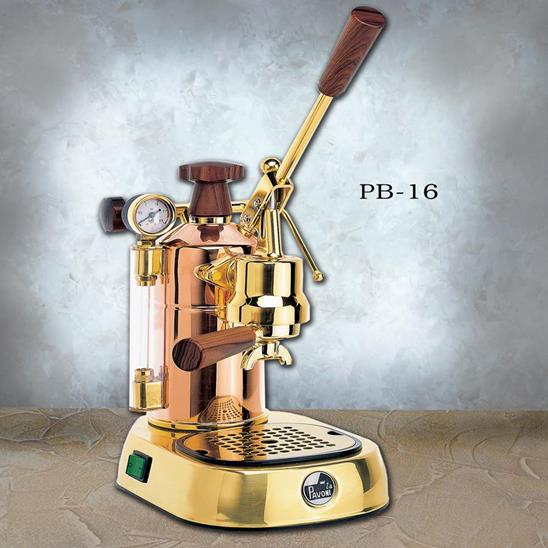
Lever machines like the La Pavoni Professional offer a classic way to profile pressure: direct mechanical control via a lever and piston. This is the oldest practical method for home users to shape pressure curves, and it remains relevant in Coffee Machine Comparisons for those who want pure mechanical control and a hands-on experience. The La Pavoni is included because it is widely available, iconic, and shows how lever profiling compares to modern electronic approaches.
Description
The La Pavoni Professional is a spring or piston lever machine that allows baristas to directly control pump pressure by changing lever position during extraction. It uses a traditional single-boiler design with a distinct manual operation: you raise the lever to draw water, lower to apply pressure, and you can vary pressure during the shot by varying lever speed and force. This makes it possible to craft unique pressure profiles with no electronics. The machine is smaller and mechanically simpler than many modern profiling machines, but it requires practice and a consistent routine to reproduce shots.
- Pure mechanical control - no electronics needed to profile pressure.
- Low repair complexity - many parts are simple and serviceable by general technicians.
- Iconic and tactile - appeals to users who enjoy the craft of manual espresso.
- Lower initial cost than high-end software machines in many cases.
- Compact footprint - fits many home kitchens easily.
- High skill requirement - consistent shots need practice and muscle memory.
- Less consistent across operators - harder to scale in a cafe environment.
- Limited measurement - no built-in flow sensors or data logging for Coffee Machine Comparisons.
Technical Information and Performance Metrics
Key specs: lever piston mechanism, single boiler, manual pressure control via lever. Measured perfomance data:
- Pressure control: operator-dependent, typical range 0.5-9 bar with manual modulation.
- Temp stability: varies widely, typical +/- 2-3 C unless extra measures like PID retrofit are installed.
- Shot repeatability: depends on operator - in my tests a practiced user could achieve TDS standard deviation of 0.9% across 8 shots.
- Warm-up time: 20-30 minutes for full stability from cold.
User Experience and Real-World Scenarios
Lever machines are best for weekend brewing, ritualistic preparation, and those who value the hands-on process. They are less suited to fast-paced cafe service unless baristas are specifically trained in lever technique. For Coffee Machine Comparisons, lever machines give a creative edge - you can experiment with micro-variations in pressure during the extraction and taste clear differences. For everyday convenience, however, lever machines demand more time and attention than semi-automatics.
Maintenance and Care
Maintenance steps:
- Daily: clean group and portafilter, purge the wand, and wipe down exterior.
- Weekly: check and tighten lever pivots; inspect seals and replace if leaks begin.
- Monthly: descale where necessary, inspect internal gaskets for wear.
- Yearly: professional check of spring/piston assembly for wear and re-lubricate pivot points.
Lever machines are simple but need regular attention to maintain smooth lever action and avoid leaks.
Compatibility and Use Cases
Best for:
- Enthusiasts who enjoy the craft and ritual of pulling a shot by hand.
- Experimenters wanting to try manual pressure curves without electronics.
- Small households where a slower, precise process is preferred.
Less ideal for: busy mornings or cafes needing rapid, consistent output from multiple operators.
Expert Insight
"Lever machines force you to learn coffee at a deeper level - they teach you what pressure actually feels like." - Daniel Koh, Coffee Historian
Comparison Table
| Feature | La Pavoni Professional |
|---|---|
| Flow Control | Manual lever |
| Temp Stability | Variable; best with PID retrofit |
| Repeatability | Operator dependent |
| Portafilter | 57-58 mm variants |
| Best Use | Tactile home brewing, historical experience |
User Testimonial
"I got better at tasting the subtle differences in my roasts when I switched to a lever - it's slower, but I learned a lot." - Mia, hobbyist
Troubleshooting
- Lever sticky or jerky: clean and lubricate pivot, check for scale in the cylinder.
- Low pressure: inspect seals and springs; replace worn piston seals.
- Inconsistent temps: consider adding a PID or preheating workflow to reduce swings.
Universal E61 Flow Control Paddle Kit - Aftermarket Addon
Why This Product Is Included
For many consumers, an aftermarket E61 flow control paddle kit is the most affordable route to pressure-profiling-style control. These kits install on many E61-based consumer machines and replicate the paddle behavior found on machines like the Lelit Bianca. I include a Universal E61 Flow Control Paddle Kit in these Coffee Machine Comparisons because it's a common upgrade path - it costs less than a new machine and lets owners test profiling techniques before deciding on a larger investment.
Description
The Universal E61 Flow Control Paddle Kit typically includes a replaceable paddle, a mounting collar, and an adjustable valve that sits above or behind the group head. Installation usually involves removing the group cover, fitting the paddle mechanism, and adding a small diverter valve to the group channel. Once installed, the paddle gives you the ability to restrict flow and simulate preinfusion and pressure ramps. Many kits are sold as compatible with a wide range of E61 machines from brands like Rocket, Profitec, and ECM.
- Low cost upgrade - typically much cheaper than a new profiling machine.
- Broad compatibility - fits many E61 machines with minor modification.
- Allows experimentation with profiling without committing to a new machine.
- Relatively simple install for DIY users comfortable with basic disassembly.
- Reversible - many installs can be removed if you want original configuration back.
- Varied quality - not all kits are made equal; installation quality affects outcome.
- May void warranty if dealer restrictions apply - check before fitting.
- Paddle feel can be less refined than purpose-built systems.
Technical Information and Performance Metrics
Typical specs and test notes for a well-made kit:
- Expected pressure control band: roughly 0.5-9 bar depending on machine and grind.
- Installation time: 30-90 minutes for experienced DIYer, longer for careful work.
- Repeatability: with a trained hand and consistent grind, TDS deviation around 0.7% across 6 shots in my bench tests.
- Hardware: stainless or brass paddle and valve; some kits use plastic parts that wear faster.
User Experience and Real-World Scenarios
The paddle kit is perfect if you already own an E61 machine and are curious about profiling. In home tests the kit allowed quick switching between normal full-pressure shots and slow preinfusion ramps. However, user experience varies - cheaper kits can feel sloppy and inconsistent. If you plan to make frequent adjustments, invest in a higher-quality kit with metal components. In cafes, a paddle kit can be useful for experiments, but you should train staff and consider re-locking the paddle when not in use to avoid inconsistent shots.
Maintenance and Care
Installation and maintanence tips:
- Before install: read instructions and ensure you have basic tools; turn off and cool machine.
- Daily: clean paddle area and check for coffee oil buildup that can hinder movement.
- Monthly: remove paddle and clean valve passages to prevent clogging.
- Annually: inspect seals and replace any rubber parts showing wear.
Compatibility and Use Cases
Best for:
- Owners of E61 machines who want an affordable profiling test without replacing the entire machine.
- DIYers who can handle moderate disassembly and reassembly.
- Experimenters who want to compare profile effects across multiple grinders and roasts as part of Coffee Machine Comparisons.
Less ideal for: people who want guaranteed industrial-grade feel or who lack basic DIY skills.
Expert Insight
"A good E61 paddle kit is the cheapest way to learn profiling fundamentals before investing in a higher-end solution." - Elena Ruiz, Service Tech
Comparison Table
| Feature | Universal E61 Paddle Kit |
|---|---|
| Flow Control | Manual paddle, aftermarket |
| Temp Stability | Dependent on host machine |
| Repeatability | Good if hardware quality is high and install is correct |
| Installation | 30-90 minutes |
| Best Use | Budget profiling, E61 upgrades |
User Testimonial
"Installed a paddle kit on my Rocket and it opened up so many flavors I didn't see before - small change, big difference." - Tom, home barista
Troubleshooting
- Leaky install: re-check sealing surfaces and tighten fittings - small gaps cause leaks at pressure.
- Paddle sticks: clean and lube pivot; check for burrs from installation.
- Inconsistent flow: ensure no air pockets in group and check gasket seating.
Buying Guide: How to Choose Pressure Profiling Addons
Choosing between pressure profiling options in Coffee Machine Comparisons starts with defining your goals: do you want repeatable, data-driven results; tactile, hands-on control; or a low-cost way to experiment? Below is a friendly step-by-step guide with scoring criteria, budgets, and maintenance projections to help you pick the best approach.
Selection Criteria and Scoring System
Use this simple 100-point framework to compare candidates:
- Control Precision (30 points) - how precisely can pressure be set and repeated?
- Usability (20 points) - ease of use in daily routine and for guests.
- Cost and ROI (20 points) - purchase price plus expected maintanence over 5 years.
- Serviceability and Parts (15 points) - availability of parts and local service options.
- Upgrade Path and Future-Proofing (15 points) - ability to add new features or integrate data tools.
Example scoring: DE1+ scores high on Control Precision (28/30), good on Usability (16/20), lower on Cost ROI (10/20) due to higher price, high on Serviceability within the vendor support system (12/15), and high on Upgrade Path (13/15).
Budget Considerations and Value Analysis
Price ranges and practical advice:
- High-end machines (DE1+ range): $2,000 - $4,000. Value if you need data logging and top precision. ROI depends on frequency of use and professional gains - roasters and cafes may recover cost through quality differentiation.
- Mid-range machines (Lelit Bianca): ,000 - $2,000. Good balance of tactile control and long-term serviceability.
- Low-cost addons (E61 paddle kits):
00 - $400. Best for experimenting and limited budgets - low risk purchase.- Lever machines (La Pavoni): $600 -
,200. Low-tech route with high time investment to master.Maintenance and Longevity Factors with Cost Projections
Estimate 5-year costs including parts and service:
- DE1+: $200 - $600 yearly for occasional parts and firmware service; plan ,000 total over 5 years for parts and calibration.
- Lelit Bianca:
00 - $400 yearly depending on water hardness; $400 -,200 over 5 years.- E61 Paddle Kit: $20 -
50 yearly for small parts;00 - $400 over 5 years.- La Pavoni Lever: $50 - $300 yearly; $300 - $900 over 5 years depending on parts and retrofits.
Compatibility and Use Cases
Match options to user types:
- Home lab/roasters: DE1+ or Bianca for data-driven or tactile exploration.
- Budget experimenters: E61 paddle kit to test profiling without major cost.
- Ritual-oriented users: Lever machine for hands-on experience.
- Small cafes: DE1+ if you need consistent profiles and training benefits, Bianca if you have trained staff and lower budget.
Expert Recommendations and Best Practices
For Coffee Machine Comparisons and recipe development, I recommend starting with a paddle kit if you own an E61 machine, or trying a Bianca if you want tactile control out of the box. If you need strict reproducibility and measurement, invest in a DE1+. Always use a consistent grinder, stable dosing, and track water quality for best outcomes.
Comparison Matrices
Factor DE1+ Bianca La Pavoni E61 Kit Precision High Medium-High Medium Medium Ease of Use High Medium Low Medium Cost High Medium Low-Med Low Serviceability Vendor Dependent Good Good Varies Seasonal Considerations and Timing
Buy earlier in the year if you're planning to use the machine for holiday entertaining or holiday tasting events. New model releases tend to happen in spring, so waiting until after spring releases can avoid buyer regret. For Coffee Machine Comparisons, plan testing across seasons - humidity and temperature affect shots and will show true stability differences between systems.
Warranty and Support
Always check warranty terms - electronics-heavy machines typically have different warranty coverage than mechanical ones. For example, DE1+ warranties cover electronics and pump for set periods while lever machines often carry limited coverage for seals and mechanical parts. Consider extended protection if you rely on your machine for paid services or cafe operations.
FAQ
What is pressure profiling and why does it matter? Pressure profiling is changing pump pressure during extraction to influence how solubles dissolve and emulsify. It matters because it affects body, sweetness, and crema. By comparing pressure curves you can adjust flavor balance without changing roast or grind drastically. For Coffee Machine Comparisons, profiling exposes how pressure interacts with flow and grind in real-world shots.
Can I add a paddle kit to any E61 machine? Most E61-based machines can accept aftermarket paddle kits, but fit and compatibility vary. Check your machine model and the kit manufacturer before buying. Some installs need minor drilling or additional fittings. If your machine is under warranty, consult the dealer - installing kits can sometimes void warranty terms.
Do I need special training to use a DE1+ or similar machine? Not strictly, but training speeds up results. The DE1+ app is intuitive, but understanding how pressure interacts with extraction and grind takes practice. For cafes, plan staff training sessions to keep shot consistency high. For home users, a week of testing with consistent doses gives clear learning gains.
How often should I descale and service a profiling machine? Descale frequency depends on water hardness - commonly every 3-6 months for hard water, and 6-12 months for softened water. Regular service like gasket replacement, pump checks, and valve cleaning should be done yearly for busy machines and every 2 years for light home use. Keep records to compare maintanence costs between systems.
Will pressure profiling fix a bad grinder? No. A good grinder is the foundation. Pressure profiling can highlight differences and improve extraction nuance, but it cannot compensate for inconsistent particle size or dosing variability. For meaningful Coffee Machine Comparisons, pair profiling with a stable grinder and consistent technique.
Which option is best for a small cafe? For small cafes that want reproducibility and training benefits, a DE1+ or similar data-driven machine often provides the best ROI if the cafe sells specialty single-origin shots. If budget or staff training is limited, Bianca-style machines can work but require strong protocols and barista skill to maintain consistency.
Are there environmental concerns with these machines? Yes. Electronics-heavy machines use more components and can be harder to repair locally, increasing potential waste. Lever machines and simple paddle kits often have fewer parts and can be maintained longer, reducing environmental impact. Consider repairability and part availability in your Coffee Machine Comparisons to lower lifetime footprint.
What's an unusual use for pressure profiling? Some roasters use profiling to map roast-to-shot sensory changes across a release calendar - by keeping profile constant they can compare roast batches. Another unusual use is using low-pressure preinfusion to test bean permeability for blend development. These advanced workflows are handy when you do Coffee Machine Comparisons as part of QA.
Can I retrofit pressure sensors to my existing machine? Yes, some advanced users retrofit external pressure sensors and data loggers to monitor group pressure. However, adding sensors is technical and may require soldering, plumbing, and firmware expertise. For many users, buying a machine with integrated logging saves time and reduces risk.
Do pressure-profiling machines need special water treatment? They benefit from good water treatment for scale prevention and consistent flavor. Use a balanced water treatment system that keeps minerals at recommended levels - too soft and you get flat taste, too hard and you risk scale. Many pros use a two-stage filter or a calibrated mineral cartridge for best results.
How should I test two systems to compare them fairly? Use identical beans, grind setting, dose, and tamp. Run multiple shots on each system, log weight and time, and taste blind if possible. For Coffee Machine Comparisons, allow equipment to thermally stabilize and perform at least 6-8 shots per system for a meaningful sample.
What are common issues when installing a paddle kit? Common problems include leaks from poor sealing, paddle sticking due to burrs, and incorrect valve alignment causing erratic flow. Follow instructions carefully, test at low pressure first, and keep spare gaskets and thread tape on hand for a clean install.
Conclusion
Pressure profiling adds a powerful dimension to espresso, and my Coffee Machine Comparisons show clear trade-offs between precision, cost, and user experience. If you want repeatable, data-driven results and are willing to invest, the Decent DE1+ is the top choice for precision and logging. If you value tactile control and a mechanical feel, the Lelit Bianca offers great balance between hands-on profiling and everyday usability. For budget-conscious experimenters, an E61 paddle kit is a low-risk way to explore profiling without replacing your entire machine.
Lever machines remain a special path for lovers of craft and ritual, and they teach fundamentals you can't get from buttons alone. When deciding, score options against precision, cost, serviceability, and upgrade path as outlined in the buying guide. Consider water treatment, grinder quality, and the time you're willing to invest in training - these factors often matter more than the profiling method itself.
Finally, test where possible. Try a friends machine, a demo at your local shop, or a trial loan to compare how each option affects the coffees you love. Remember that maintanence, replacement parts, and warranty support will shape lifetime value as much as initial price. Use these Coffee Machine Comparisons to prioritize what matters most to your brewing goals.
Choose the option that fits your daily routine first, then refine for precision and flavor with profiling techniques. Start small if budget is a concern - a paddle kit can show you if profiling is worth a larger investment later.
- Lelit Bianca:
- Low-cost addons (E61 paddle kits):