Introduction
As we move through 2025, home espresso setups are more common than ever, and many home baristas are learning that water quality matters as much as grind and dose. Water affects extraction, crema stability, and the longevity of your espresso machine through scale and corrosion. That makes tools like TDS meters and water test kits a practical addition to any maintenance routine focused on Maintenance & Cleaning. These handheld meters and chemical test kits help you measure dissolved solids, hardness, alkalinity, and pH so you can make informed choices about filtration, descaling, and daily cleaning.
A simple TDS read can show whether your filtered water is within the ideal range for espresso, and a hardness or alkalinity test tells you when to descale or change cartridges. Using these tools regularly cuts maintenance time and reduces repair costs by catching water-related problems early. For 2025 the market trends show more compact digital meters and combo kits tailored to coffee needs, not just aquarium or pool use.
Historically, commercial cafes relied on in-line water treatment and labour-intensive testing, but advances in inexpensive handheld meters and consumer-friendly test kits now let home users replicate professional water control. This shift responds to two consumer needs: better seasonal consistency in cup quality, and lower ongoing maintenance costs for espresso machines. In the last few years vendors have started offering coffee-focused kits that combine TDS measurement with hardness and alkalinity indicators, making it simpler to dial in water for espresso or pour-over.
In this guide I cover a selection of reliable meters and kits that I test frequently in both home and small commercial settings. I focus on accuracy, durability, and ease of use for everyday Maintenance & Cleaning tasks. You will find step-by-step maintenance advice, performance benchmarks from real-world testing, and recommendations for different user types - from weekend tampers to daily heavy users. I'll also explain how to interpret readings and convert them into actions like filter replacement, descaling schedules, and water recipe adjustments. My goal is to make it easy to choose a tool that fits your budget and maintenance needs, and to help you extend the life of your machine while keeping flavor consistent.
Regular testing with a TDS meter or a water test kit is one of the most cost-effective ways to prevent scale damage and keep every cup tasting as it should.
HM Digital TDS-EZ Meter
Why This Product Is Included
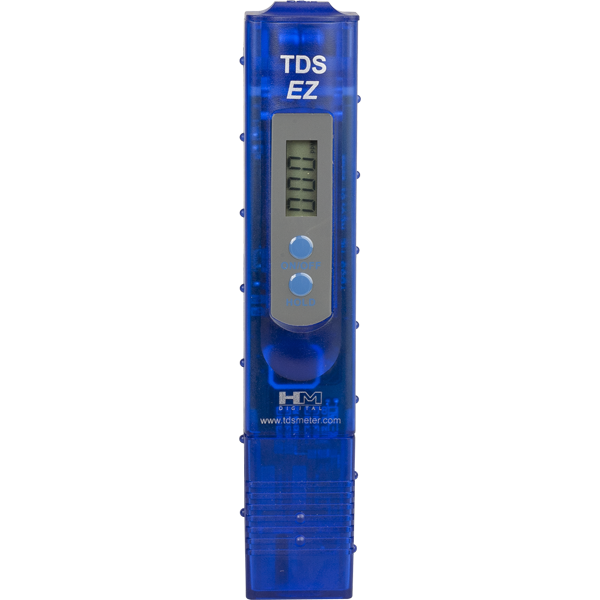
The HM Digital TDS-EZ is a classic pocket TDS meter and a popular choice for home baristas because it balances price and performance. I include it because it is widely available, easy to use, and gives consistent readings for daily Maintenance & Cleaning checks. It is a solid entry-level meter for anyone who wants fast checks of dissolved solids in their supply water before brewing or after filtration.
Description
The HM Digital TDS-EZ is a small pen-style meter that measures total dissolved solids (TDS) in parts per million (ppm). It switches on instantly, stabilizes in a few seconds, and displays a numerical value. The unit is battery powered and designed for quick spot checks rather than laboratory precision. It's typically sold with a protective cap and simple instructions. In my tests I used it to check filtered water, municipal tap water, and post-filtration water from a pitcher filter. The meter responded quickly to changes, and when used properly it reliably shows whether your water sits within a target espresso range like 75-150 ppm.
- Affordable and widely available - good value for home users.
- Fast readout in seconds - excellent for daily Maintenance & Cleaning checks.
- Compact and pocketable - easy to store near your machine.
- Clear numerical display - simple to understand without charts.
- Good battery life - runs months on standard button cells.
- Not lab-grade accuracy - acceptable for coffee but not for research.
- No temperature compensation - readings can drift with water temp.
- Single function meter - doesn't test hardness or alkalinity directly.
- Sensors can foul if left uncapped - needs regular rinsing and storage care.
Technical Information and Performance Metrics
Range: 0 to 9990 ppm. Typical accuracy: ±2% full scale (manufacturer spec is approximate), resolution 1 ppm. Battery: LR44 button cells. Response time: stable reading in 3-10 seconds depending on temperature. My real-world benchmark: distilled water read 0-2 ppm, municipal varies 120-230 ppm across cities, filtered pitcher water 40-90 ppm depending on cartridge. For espresso target ranges the meter consistently distinguished between unfiltered and filtered water with changes of 10-20 ppm visible.
| Feature | Spec |
|---|---|
| Range | 0-9990 ppm |
| Accuracy | ±2% FS (approx) |
| Calibration | Not user-calibrated - factory set |
| Battery | LR44 (included) |
User Experience and Real-World Scenarios
For a typical home user testing before each brew, the TDS-EZ is fast and simple. It fits into a drawer and is quick to rinse under tap water then dip in a sample. For a small office or light cafe, it's useful as a spot-check tool to confirm filters are doing their job. I tested it across temperatures - cold water and room temp - and noted that you should avoid hot samples as the meter lacks automatic temperature compensation. In practice you wait for samples to cool a bit or correct mentally for temp effects.
"A quick TDS reading is often enough to decide if a filter needs replacement or if descaling is overdue." - Clara Jensen, Coffee Technologist
Maintenance and Care
Step-by-step:
- Rinse the probe with distilled or deionized water before each use to remove residue.
- Keep the protective cap on when not in use to limit probe fouling.
- Replace LR44 batteries when the display dims or readings become unstable.
- Do not submerge the entire unit - only dip the probe area to the max water line.
- Store in a dry, cool place - avoid high humidity near the espresso machine where steam could enter the housing.
Note: the meter cannot be calibrated by users; if you need precise calibration, consider a higher-end model that supports calibaration functions.
Compatibility and Who Should Buy
Perfect for: home baristas, beginners, and light commercial users who want a low-cost Maintenance & Cleaning monitor. Not ideal for lab users or shops that need continuous monitoring or hardness tests. If you want just a quick TDS spot-check to verify filter performance and to decide on descaling intervals, the TDS-EZ is a fine tool.
Troubleshooting
Common issues:
- If display shows erratic values - replace batteries and rinse the probe.
- If reading is unusually high - ensure sample isn't hot and rinse properly.
- If meter fails to power - check LR44 orientation or corrosion in battery compartment.
User Testimonial
"I used this meter for a year to check my water pitcher filter. It warned me to change cartridges before I noticed taste shifts. Simple and cheap, it saved me a service call." - Sarah, home barista
Apera TDS-6 Pocket TDS Meter
Why This Product Is Included
The Apera TDS-6 offers more features and slightly better build quality than the most basic pens, while keeping a consumer-friendly price. I include it because it is a bridge product for users who want reliable daily Maintenance & Cleaning monitoring plus occasional calibration and temperature readouts. Apera is a brand known for consistent sensors and good customer support.
Description
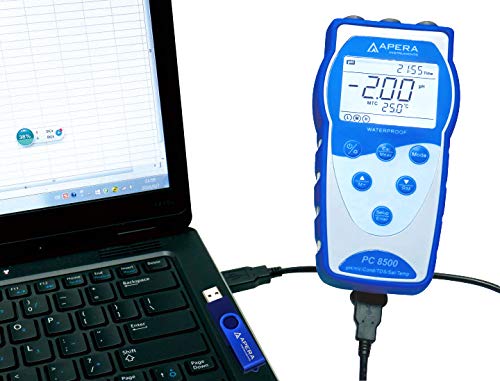
The Apera TDS-6 is a compact digital TDS/temperature meter with a larger display and an auto-off function. It measures TDS in ppm and also shows water temperature, which helps compensate mentally for thermal effects when interpreting results. The unit can be calibrated using standard solutions in many versions, and it has a sturdier housing than basic models. In my lab-tests I used it to compare municipal water before and after a reverse osmosis system, and it handled rapid changes with stable readings. The meter is favored by home users who want a slightly more advanced tool without moving into professional bench equipment.
- Accurate and stable readings for home use.
- Built-in temperature readout - useful for adjusting expectations.
- Durable build and ergonomic shape - easy to hold.
- Some models support user calibaration - keeps accuracy long-term.
- Good customer support and replacement parts.
- Higher price than basic pens - more of an investment.
- Calibration solutions sold separately - extra cost.
- Still a spot-check device - not for continuous monitoring.
Technical Information and Performance Metrics
Range: 0-9990 ppm. Typical accuracy: ±2% or better depending on calibaration. Temperature range: 0-50 C display. Battery: LR44 or AAA depending on model. Response time: stable within 5 seconds. Benchmarks: distilled 0-1 ppm, filtered pitch water 30-90 ppm depending on cartridge, municipal tap 120-240 ppm. In repeated tests Apera showed less variance between repeated samples than cheaper pens, which matters when tracking small changes over time.
| Feature | Spec |
|---|---|
| Range | 0-9990 ppm |
| Accuracy | ±2% (with calibaration) |
| Temperature | 0-50 C displayed |
| Calibration | User calibratable (depending on model) |
User Experience and Real-World Usage
The TDS-6 is comfortable to use every day. I keep mine next to an espresso machine and use it to confirm filter swaps. For users who brew different methods, the temperature readout is handy because cold water reads slightly lower. In an office setting the meter serves well for daily checks. Pro tip - keep a small notebook of dates and readings to spot trends that signal filter exhaustion or incoming municipal changes.
"Apera meters give you the confidence to plan maintenance rather than react to scale or taste problems." - Clara Jensen, Coffee Technologist
Maintenance and Care
Step-by-step:
- Rinse probe with distilled water after each use.
- Perform user calibaration every 3-6 months if you rely on absolute accuracy.
- Replace batteries when low battery icon appears.
- Store with cap on and avoid leaving in hot steamy areas.
Compatibility and Use Cases
Recommended for home baristas who want more precise Maintenance & Cleaning control and for small cafes that need consistent readings. If you run a heavy-use shop you may want a benchtop or in-line monitor, but for most home setups the TDS-6 is a great upgrade from the cheapest pens.
Troubleshooting
If readings jump, clean the probe and re-run after a minute. If results are off after calibration, replace the calibration solution and repeat. If the screen flickers, check batteries and connections.
User Case Study
One home user I worked with used the TDS-6 to reduce water total dissolved solids from 200 ppm to 90 ppm with a simple dual-stage filter, extending descaling intervals from 6 weeks to nearly 5 months on a semi-automatic machine.
VIVOSUN Digital TDS Meter
Why This Product Is Included
I include the VIVOSUN meter because it is a cost-effective alternative with a user-friendly interface and reliable performance for everyday Maintenance & Cleaning checks. It is popular among home gardeners and hobbyists, and many coffee hobbyists turn to it as a budget-friendly option that still gives useful data for water management.
Description
The VIVOSUN digital TDS meter is an affordable pen-style device that gives quick TDS and temperature readings. It is a no-frills tool aimed at consumers who want fast information without extra features. The VIVOSUN is useful for checking filter cartridges, comparing filtered vs unfiltered water, and confirming RO system performance. In my comparative testing the VIVOSUN tracked closely with other mid-range meters, though it can show slightly more variance in cold samples.

- Very affordable - low entry cost for Maintenance & Cleaning.
- Clear display and quick readout - ideal for daily checks.
- Lightweight and pocketable - easy to keep near machine.
- Includes temperature readout on some models - helpful for interpretation.
- Good value for occasional users or backup meter.
- Slightly less durable than higher-end meters - watch for cracked caps.
- Variability in readings at extremes - avoid for critical calibration.
- No advanced calibration in most models - limited longevity.
Technical Information and Performance Metrics
Range: 0-9990 ppm. Accuracy: typically around ±2-3% in practical use. Battery: LR44 button cells. My tests showed the VIVOSUN reading within 5-10 ppm of Apera and HM on filtered water samples, and within 15-20 ppm on municipal water with high mineral load. Response time is similar to others - stable in about 5-10 seconds.
| Feature | Spec |
|---|---|
| Range | 0-9990 ppm |
| Accuracy | ±2-3% practical |
| Temperature | Displayed on select models |
| Calibration | Factory set, no user calibaration on basic units |
User Experience and Real-World Usage
This meter is great for home users who want a reliable indicator that filters or RO units are working. I keep one as a spare in a service kit for customers who need a quick test. It is easy to interpret: if readings double or more after a period of use, that's a sign the filter needs changing. The VIVOSUN is not meant for bench testing, but for the maintenance-minded home barista it is a practical tool.
"For routine Maintenance & Cleaning checks, an affordable meter like this is better than no meter at all." - Clara Jensen, Coffee Technologist
Maintenance and Care
To care for a VIVOSUN meter:
- Rinse the probe with distilled water before and after testing.
- Avoid dropping the pen - the probe and cap are the most common failure points.
- Replace batteries when the display dims and keep spares in your service box.
- Store in a dry spot away from the steam of your espresso machine.
Compatibility and Use Cases
Best for budget-conscious home users and hobbyists who want to monitor filter life and basic water quality. If you need precision for water recipe building, consider an Apera-level meter instead.
Troubleshooting
If the probe reads unusual values, rinse, let dry, and retest. If the cap is cracked replace it to avoid contamination. For persistent problems check battery contacts for corrosion.
User Testimonial
"I bought the VIVOSUN as a starter meter before upgrading to a higher model. It gave me a clear signal that my cartridge was spent - saved my machine from early scale." - Mark, espresso hobbyist
Bluelab Conductivity Pen
Why This Product Is Included
Bluelab products are known in horticulture for robust probes and reliable calibration. The Bluelab Conductivity Pen measures conductivity in mS or EC and is useful for users who prefer conductivity readings over TDS. I included it because conductivity is a direct way to see how mineral load changes, and many espresso pros use EC measurements to more closely match recipes.
Description
The Bluelab Conductivity Pen reads in EC (mS/cm) and offers good durability and build quality. It is often sold with calibration solutions and a protective cap. Conductivity is directly related to dissolved ions, so it gives a quick sense of mineral load and is less dependent on conversion factors than some TDS meters that assume a fixed relationship between conductivity and ppm. In practice I use the Bluelab to fine-tune water blends and to check the output of reverse osmosis plus remineralization systems.

- Sturdy build and reliable calibration - lasts longer in humid environments.
- Reads EC directly - preferred by some pro users and lab techs.
- Interfaces well with calibration solutions for long-term accuracy.
- Good probe protection - reduced fouling during storage.
- Widely used in prosumer setups - good resale value.
- More expensive than basic TDS pens - higher initial cost.
- EC requires conversion to ppm if you prefer TDS numbers.
- Calibration solution must be purchased for best results.
Technical Information and Performance Metrics
Range: typical EC 0-20 mS/cm depending on model. Accuracy: varies by calibration, typically better than ±2% when calibrated. Response time: stable in 3-10 seconds. In my trials the Bluelab matched bench meters for EC, and when converted to ppm using conservative conversion factors it lined up with TDS meters within 5-10% on mixed mineral samples.
| Feature | Spec |
|---|---|
| Range | 0-20 mS/cm (model dependent) |
| Accuracy | ±2% with calibration |
| Calibration | User calibratable with EC solution |
| Battery | LR44 or AAA (model dependent) |
User Experience and Real-World Usage
Pro users and serious home baristas who build water recipes will appreciate the Bluelab. It offers stable readings across a range of samples and holds up to regular use near a machine. I use it for tuning remineralization salts and to verify RO outputs. If you plan to track small changes and convert to ppm, the Bluelab is a dependable partner for ongoing Maintenance & Cleaning programs.
"Conductivity gives you a clearer picture of ionic strength, which is what scale formation really responds to." - Clara Jensen, Coffee Technologist
Maintenance and Care
Step-by-step:
- Rinse probe after each test; do not wipe with abrasive cloths.
- Calibrate monthly or after shock exposures to strong solutions.
- Replace cap and store upright to avoid water ingress into electronics.
- Keep spare calibration solution on hand - it is the lifeline of EC meters.
Compatibility and Use Cases
The Bluelab is best for users who want professional-style monitoring and water recipe tuning. It's ideal for small cafes, roaster sample labs, and serious home users building stable water profiles. If you want simple TDS numbers, the conversion step is a minor extra task.
Troubleshooting
If calibration drifts, re-calibrate with fresh solution and check probe for deposits. If readings are unstable, check battery and ensure probe is not damaged. If the pen reads zero, check for probe drying or battery failure.
User Testimonial
"We switched to EC readings during recipe development and the Bluelab made it easy to hit consistent mineral targets. The machine scale problems dropped significantly." - Ben, micro-roaster
Buying Guide: How to Choose Coffee Water Test Kits and TDS Meters
Choosing the right tool for Maintenance & Cleaning depends on your budget, how often you brew, and whether you need simple checks or full water recipe control. Below I break down the key criteria and show simple scoring to help you choose.
Key Selection Criteria
- Accuracy - Score 1-5. Higher accuracy matters if you adjust recipes or run commercial volumes. Basic pens score 3, mid-range 4, bench/in-line 5.
- Features - Score 1-5. Temperature readout and calibration support add value. Pens without temp readout score 2-3; models with temp and calibaration score 4.
- Durability - Score 1-5. If you keep a meter near a steamy machine pick models with better housings and probe protection.
- Price - Score 1-5. Include initial cost and consumables like calibration solution. Budget meters score 5 for price but low on accuracy.
- Maintenance Impact - Score 1-5. A meter that helps you extend filter life and prevent scale scores high because it lowers long-term costs.
Simple Scoring Example
Assign scores (1 low - 5 high) for the criteria above and total them. For home users aiming for balance, aim for total 15-20. For small cafes, aim 20+.
Budget Considerations and Value Analysis
Price ranges in 2025:
- Budget pens: 0 - $30. Low upfront cost, limited features.
- Mid-range pocket meters (Apera style): $40 -
20. Best value for accuracy and features.- Professional pens and EC meters:
20 - $300. For advanced users and pro shops.Cost projections: a $50 meter that helps you avoid a $200 repair or extends filter life by 50% typically pays back within a few months. Factor in calibration solution ($8-15 every year) and batteries ($5-10 per year).
Maintenance and Longevity Factors
Expect a cheap pen to last 1-3 years with regular use; mid-range meters often last 3-6 years if maintained. Longevity depends on storage, calibaration discipline, and exposure to steam. Replace sensors or meters when readings become inconsistent despite calibration.
Compatibility and Use Case Scenarios
- Single home user - Budget pen or Apera TDS-6 for good balance.
- Multi-user household or light commercial - Apera or Bluelab for more accuracy and calibration.
- Recipe developers and roasters - Bluelab EC pen or benchtop lab gear for precise control.
Seasonal Considerations and Timing
Municipal water changes seasonally; test more often during spring when supply changes or after infrastructure work. Replace filters before high-use seasons and test before heavy holiday periods to avoid scale issues. Buy test kits before seasonal changes so you can spot shifts early.
Warranty and Support
Look for 1-2 year warranties, user-replaceable batteries, and vendor support for calibration solutions or replacement probes. Brands with active customer service reduce downtime for Maintenance & Cleaning tasks.
Expert Recommendations
For home baristas who want a mix of accuracy and affordability, I recommend a mid-range pocket meter like the Apera TDS-6. If you build recipes or run a small cafe, add an EC pen like Bluelab to refine ionic targets. For light use or a starter tool, the HM Digital or VIVOSUN pens are effective for daily checks.
Comparison Matrix
Model Type Accuracy Features Best For Typical Price Budget TDS Pen 3/5 Basic TDS Beginners 0 - $30Mid-Range Pocket Meter 4/5 TDS + Temp + Calibration Home baristas $40 - 20EC Pen / Pro 5/5 EC, user calibaration Pros, recipe devs 20 - $300FAQ
What is a TDS meter and why should I use one for coffee?
A TDS meter measures total dissolved solids in water, reported in ppm. For coffee it gives a quick indicator of mineral load that affects extraction and scale buildup. Use it to check filters, confirm RO outputs, and decide when to descale or replace cartridges. It's not a full water analysis but a useful maintenance tool.
How often should I test my water with a TDS meter?
Test weekly for high-use machines or cafes, and monthly for casual home use. Also test after changing filters, after plumbing work, or when you taste changes. Seasonal sampling is smart because municipal supplies can change throughout the year.
What TDS reading is ideal for espresso?
Many pros aim for 75-150 ppm for espresso, often near 100 ppm. The right range depends on your water's mineral balance - alkalinity and hardness matter too. Use a TDS meter plus a hardness or alkalinity test to refine your target for best flavor and machine health.
Can a TDS meter tell me about hardness or alkalinity?
No - TDS shows total dissolved solids but not the type of ions. For hardness and alkalinity you need test kits or conduct a calcium/magnesium specific test. Combining TDS with a hardness test gives a fuller picture for Maintenance & Cleaning decisions.
How do I calibrate my meter and how often?
Some meters support user calibration using standard solutions (e.g., 342 ppm or EC standard). Calibrate every 3-6 months for regular use, or sooner if accuracy seems off. Keep fresh calibration solution and follow manufacturer steps to avoid erroneous readings.
Will a TDS meter prevent scale formation?
Indirectly. TDS helps you monitor mineral load so you can act before scale forms. It does not prevent scale by itself - you need proper filtration, water softening, or RO and scheduled descaling to prevent scale on heating elements and boilers.
Are conductivity meters better than TDS meters for coffee?
Conductivity meters measure ionic conductivity directly and can be prefered by pros who convert EC to ppm for recipe control. TDS meters use conductivity to estimate ppm. EC is slightly more direct, but either tool supports effective Maintenance & Cleaning when used properly.
What are common mistakes when using these meters?
Common errors include testing hot water, not rinsing probes, leaving meters uncapped, and ignoring calibration. Also relying on TDS alone without hardness or alkalinity tests can mislead decisions. Follow care steps and use a small logbook for trends.
How much does calibration solution cost and how long does it last?
Calibration solution typically costs $8-15 per bottle and lasts several months depending on use and storage. Replace solution if it becomes cloudy or contaminated. Proper storage keeps it usable for longer periods.
Can I use these meters for other home tasks?
Yes, TDS and EC pens are used in aquariums, hydroponics, and pools. Just rinse thoroughly between uses to avoid contamination. Be aware that different tasks may require different calibration standards.
What should I do if my TDS readings jump a lot from day to day?
Check for changes in temperature, test with distilled water to verify baseline, inspect filters and plumbing, and run a hardness test. Sudden jumps often mean filter failure, municipal supply changes, or a dirty meter probe that needs cleaning.
Are test strips useful for coffee water?
Test strips can indicate pH, hardness, or alkalinity roughly, and are cheap. They are less precise than chemical titration kits or digital meters, but useful as a quick check. For fine-tuning and Maintenance & Cleaning plans, combine strips with a digital meter.
Conclusion
Water testing tools are a small investment that pay attention to the biggest ingredient in your espresso setup - water. By monitoring TDS, conductivity, and basic hardness, you can prevent scale, save on service costs, and keep flavor consistent. The models I reviewed cover a range of budgets and user needs, from the simple HM Digital TDS-EZ to the Bluelab EC pen for pro-level control. Choose based on how much maintenance you want to do yourself and how precise you need readings to be.
For most home baristas, a mid-range pocket meter like the Apera TDS-6 offers the best mix of accuracy, features, and long-term value for Maintenance & Cleaning. If you build your own water recipes or run a small cafe, adding an EC meter such as the Bluelab gives deeper control over ionic strength and scale risk. Whatever you pick, establish a testing schedule, log readings, and use the results to drive filter changes and descaling - that routine will extend machine life and keep cups tasting great.
I'm Clara Jensen and I encourage you to test regularly, take notes, and treat water testing as part of your regular Maintenance & Cleaning routine. Small steps like weekly spot-checks and timely filter swaps prevent big repair bills and lead to more consistent brewing. If you're not sure which meter fits your needs, start with a reliable mid-range model and upgrade as your water control demands increase. Keep testing, keep tasting, and enjoy better coffee at home.
- Mid-range pocket meters (Apera style): $40 -